Visual SEO for home service companies: why your job photos matter more in 2027
Google Search Console now reports on Lens and image-based search. Why contractors should treat job photos as assets, and how to build a photo system.
By Ryan McKeel · JUICED Media, Clearwater FL
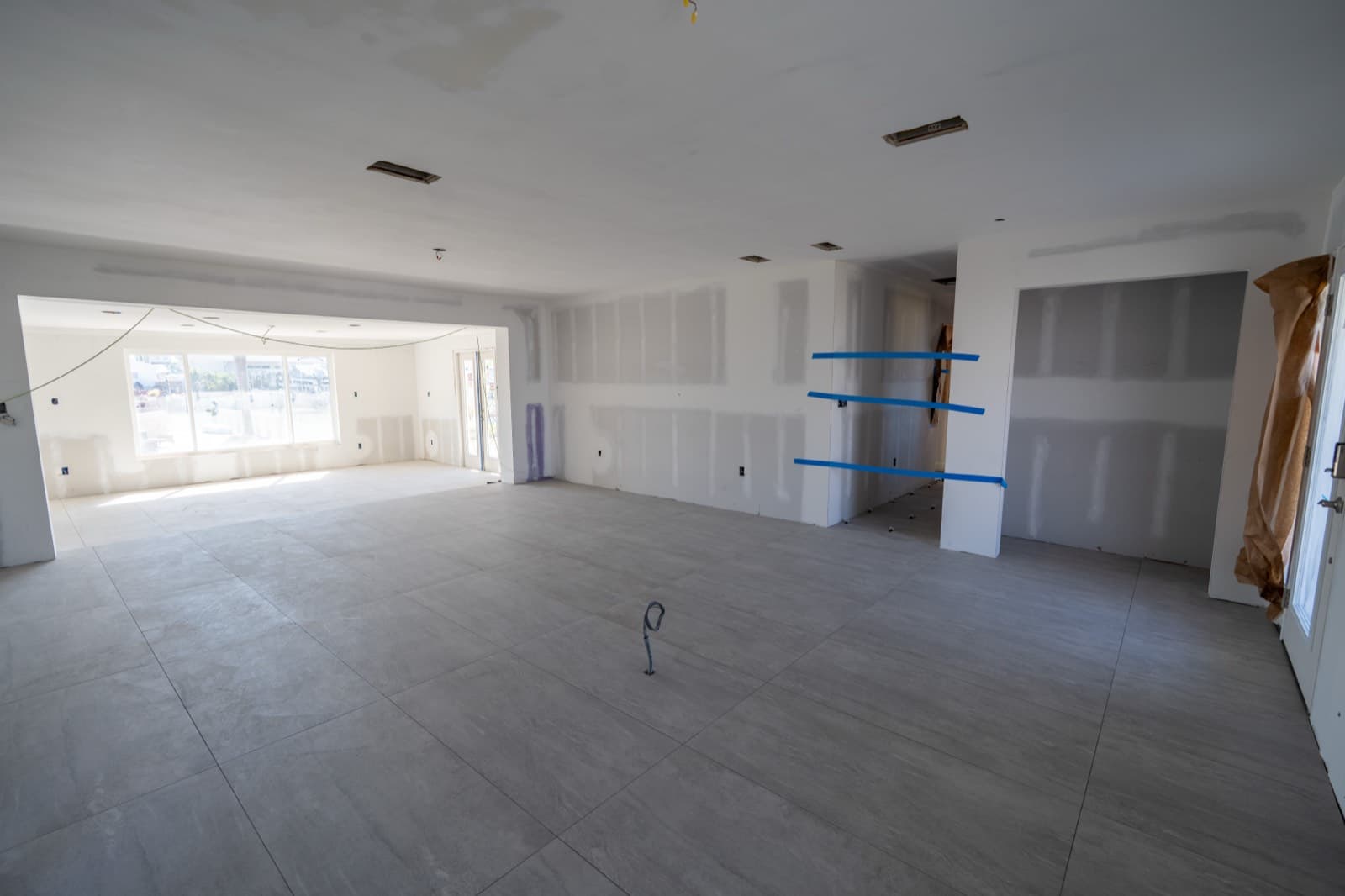
Home service companies need to start taking visual SEO seriously, and there is now a way to measure it.
On September 24, 2026, Google added reporting for multimodal search to Search Console (Google Search Central). Website owners can now see how their pages perform when someone searches with an image instead of typed words — Google Lens, Circle to Search on Android, image uploads to Google Search, and Chrome's "Search this image."
This is a reporting update, not a ranking change. But it shows where Google is investing, and it gives you a way to measure what visual search is already doing for your business.
The short answer
- It's a new filter, not a new ranking factor. Nothing about your site changed on September 24.
- The data is additive. Google confirmed these impressions were not previously counted, so your text-search numbers should not drop.
- You will not see the photo. The Queries dimension is unavailable for multimodal, so you get pages, dates, countries and devices — never the image someone pointed their phone at.
- The work is the same work. Original photos, on the right page, with descriptive file names and honest alt text.
- Home services has the easiest raw material in the world and mostly throws it away.
Why this matters for home services
Home services may be the easiest industry on earth to document visually. Most companies still do it badly.
Every roof replacement, HVAC install, water heater swap, remodel, panel upgrade, repipe and restoration job creates visual proof. Many companies never capture it. Others take one crooked photo in bad light and never use it again.
Think about how a homeowner actually searches now. Someone sees a stain spreading across a ceiling in Largo, a corroded water heater in a Clearwater garage, or a crack running across a Palm Harbor driveway. They do not know the words. Is that a "water heater leak" or "corroded T&P valve" or "rusted tank"? They do not know, so they do not type. They point the phone at it.
Visual search starts from the problem itself. That is the shift. Text search required the homeowner to already know enough vocabulary to describe their problem. Visual search does not. Your photos are what connect that camera to your work.
Build job photography into the job, not around it
Going into 2027, stop treating job photos as an afterthought and run a simple, repeatable process:
- Take clear before photos. Show the problem the way the homeowner sees it, not the way a technician sees it.
- Take after photos from the same angle. Same spot, same height. A matched pair is worth ten unmatched singles.
- Photograph the equipment. Brand, model, and the install itself. Legible, not artistic.
- Photograph your technicians working. Real people on real jobs, which is also what separates you from a stock-photo competitor.
- Photograph the finished result. Clean, well lit, straight on.
- Organize by service and city. "water-heater-clearwater" is infinitely more useful than "IMG_4481."
- Put them to work. Service pages, location pages, Google Business Profile, social, case studies and ads.
Step six is where almost everyone fails. Not because it is hard, but because it happens after the truck has left and nobody owns it. Pick one person and one folder structure. A shared drive with folders named by service and city beats any app nobody opens.
Step seven is where the money is. A photo sitting in a folder is worth nothing. The same photo on your water heater service page and your Clearwater location page is an asset working every day.
The three details that make a photo findable
Photos do not rank on their own. These three things make them legible to Google:
| Detail | Bad | Good |
|---|---|---|
| File name | IMG_4481.jpg |
water-heater-replacement-clearwater.jpg |
| Alt text | blank, or plumbing plumber Clearwater plumbing services |
Fifty-gallon gas water heater newly installed in a garage with new shutoff valve and expansion tank |
| Placement | dumped on a gallery page | on the water heater service page, next to the water heater copy |
Alt text should describe what is actually in the frame. Keyword stuffing it reads as spam to Google and as nonsense to anyone using a screen reader. Google's own image best practices say the same thing in more words.
Placement matters more than people expect. An image on a page about the thing in the image is a match. The same image on a generic "our work" page is a shrug. If you are already doing Google Business Profile work, the same photos should be going there too — that profile is often the first place a Tampa Bay homeowner lands.
Storm season is the highest-stakes documentation you will do
Hurricane season runs through November 30, and for Florida trades this is where photo discipline stops being a marketing exercise.
After a named storm, the quality of evidence captured in the first 48 hours often decides how a claim goes. Photograph all damage — wide and tight, every elevation, every room — before debris moves and before any temporary repair. Adjusters routinely reduce or deny what was not documented in its post-storm state.
That is a legal and financial reason to have a photo system, and most contractors build one only after a claim goes sideways. The useful part: a crew already trained to shoot before, during and after on a normal Tuesday will do it correctly on the worst week of the year, because it is habit rather than a scramble.
One caution. If you advertise storm or insurance restoration work in Florida, there are real rules about what you can say and offer. We covered those in Florida roofing advertising rules for insurance claims. Good documentation is not a license for a bad offer.
What this isn't
This is not "take 500 pictures and Google will rank you number one." That is not how any of this works. Photos support good pages. They do not replace them. A thin service page with forty beautiful images is still a thin service page.
It is also worth being precise about what the new report gives you. You will see which of your pages appeared in image-based searches and how often. You will not see the photo someone took, and you will not get query data. Anyone selling you "Google Lens keyword research" is selling something that does not exist.
And it is a small number today for most local businesses. That is fine. You are not chasing this quarter's traffic — you are building the library that gets used when the number stops being small.
The bottom line
Google is clearly investing in visual search, and website owners can now measure it. If search keeps moving away from typing keywords into a box, the companies with the deepest library of original visual proof will have far more to work with than the ones running stock photos and a logo.
The advice for every home service company going into 2027: stop treating job photos like social media leftovers. They are digital assets, and right now most of yours are sitting on a phone in a truck in Pinellas County doing nothing.
If you want help turning job photos into a system that actually feeds your website, your Google profile and your ads — that is what we do. Send us your site and the three services you most want to be found for, and we will tell you which pages are missing visual proof and what to shoot first. If you would rather we handle the shooting, that's a service too, and it pairs with the one shoot day, thirty days of content approach we use for contractors across Tampa Bay.
Questions people ask about this
- What is multimodal search in Google Search Console?
- Multimodal is a search type filter Google added to the Search Console performance report on September 24, 2026. It covers web results people reached by searching with an image instead of typing — Google Lens, Circle to Search on Android, uploading an image to Google Search, and Chrome's right-click 'Search this image'. It sits alongside the existing Web, Image, Video and News filters.
- Does the multimodal report show which photo someone searched with?
- No. Google does not provide the Queries dimension for multimodal traffic, so you can see which of your pages appeared, plus country, device and date, but never the image the person pointed their camera at. Treat it as a volume and page-level signal, not as keyword research.
- Will the new multimodal filter make my existing Search Console numbers drop?
- No. Google confirmed this data was not previously included in the counts, so it is new data being added rather than existing traffic being reclassified. Your text-search totals should not fall because the multimodal type appeared. If your numbers did drop the week it launched, something else caused it.
- Do file names and alt text actually affect whether photos get found?
- Yes, and they are the cheapest image SEO you can do. Descriptive file names and accurate alt text are the primary signals Google uses to understand what an image shows. 'water-heater-replacement-clearwater.jpg' with alt text describing the actual install tells Google something. 'IMG_4481.jpg' with blank alt text tells it nothing. This is not a ranking guarantee — it is the difference between being legible and being invisible.
- How many photos should a contractor take on each job?
- Fewer than you would guess, taken consistently, beats a huge pile taken once. A workable minimum is a clear before shot, two or three progress shots, the equipment with the brand and model visible, and a clean straight-on after shot from the same angle as the before. That is six to eight images per job. The constraint is never the camera — it is whether the crew does it every time.
- Can I just post job photos to social media instead of my website?
- Post them to both, but social alone will not help you in search. Google's multimodal reporting covers web results — pages on your own site. A photo that lives only on Instagram is not attached to a page Google can return. Put the photo on the matching service and location page first, then reuse it on social, your Google Business Profile and ads.
Want this run for you?
Fifteen minutes. We'll pull your competitors' current ads and tell you what we'd shoot.
Book a Call