Google Business Profile for contractors: the Florida settings that decide who shows up
Google Business Profile for contractors in Florida: the service-area settings, categories and photo habits that decide whether you show up in the map pack.
By Ryan McKeel · JUICED Media, Clearwater FL
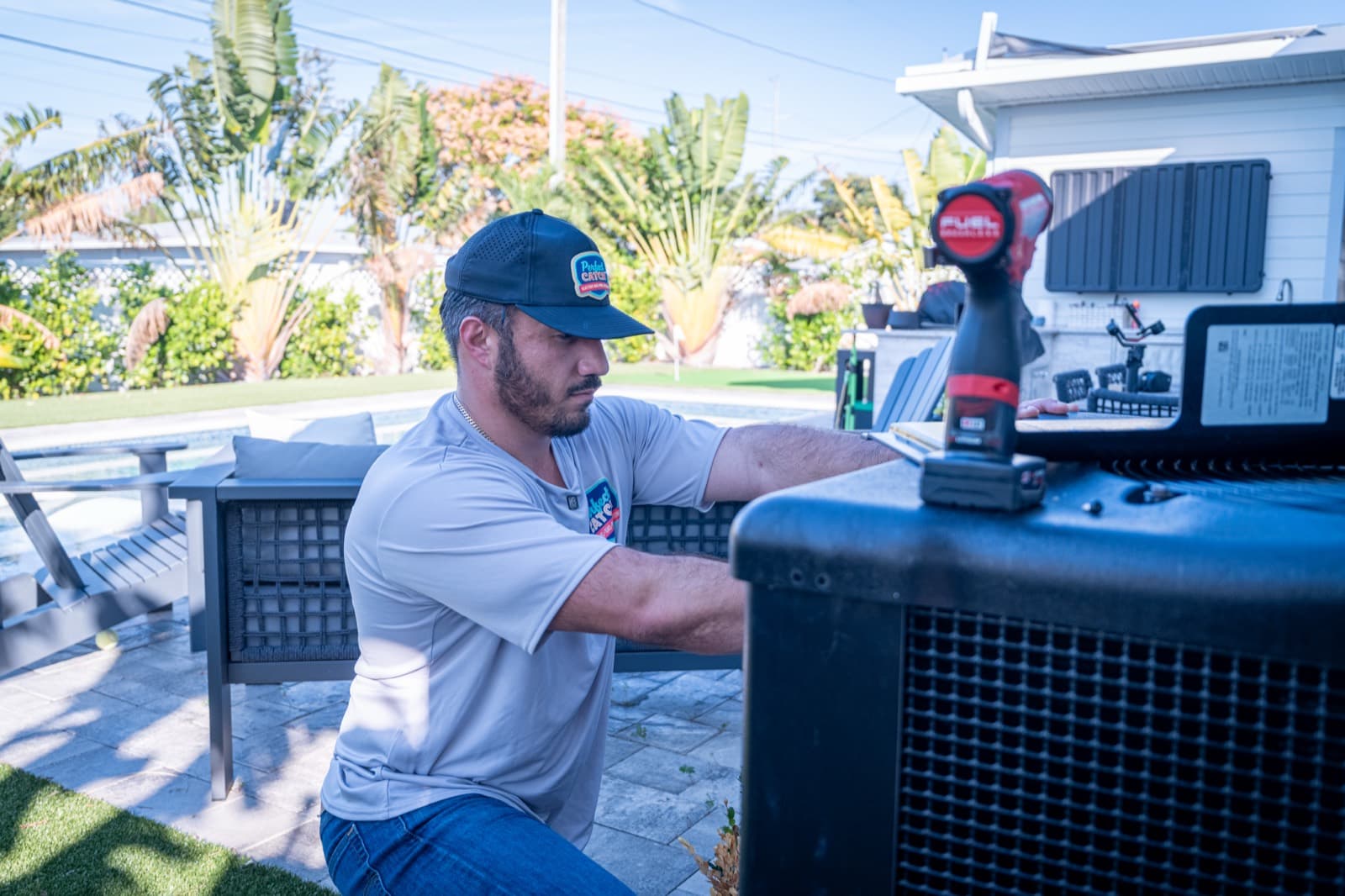
Google Business Profile for contractors is mostly decided by three settings, not by how often you post: your primary category, your address configuration and your service area. Google states plainly that local results come down to relevance, distance and prominence — and two of those are fixed the day you configure the profile, not earned over months.
That is the part most checklists skip. They hand you forty tasks and never say which three actually move you.
The short answer
- Primary category is the biggest single lever. It decides which searches you are eligible for at all. Everything else competes inside that eligibility.
- Distance is a hard ceiling you cannot buy past. A Largo homeowner searching "AC repair near me" will not see a Brandon company, however good its profile is.
- Most Florida contractors should hide the address and define a service area, because Google requires listed addresses to be staffed.
- Photos and reviews are the two things you can keep feeding. Both should be from this month, not from 2024.
- Your profile cannot carry a weak website. Google reads the profile and the site as one business.
Set the primary category before anything else
Your primary category is the closest thing to a switch in the whole system. "Roofing contractor," "HVAC contractor" and "General contractor" drop you into three different competitive pools, and you only get one primary.
The mistake we see across Tampa Bay is breadth. A company that does roofing, soffit, gutters and light remodeling picks "General contractor" because it feels more honest. Then it competes against every builder in Pinellas County for searches nobody types, instead of winning the roofing searches homeowners type every day after a storm.
Pick the category that matches the job you most want to be called for. Add the rest as secondary categories. If you genuinely run two distinct trades under one roof, that is a real strategic question worth working through — not a checkbox.
Address or service area: the choice that sets your radius
Google's service-area guidelines draw a clean line. If you serve customers at your address, it has to be staffed during posted hours and able to receive them. If you drive to the customer, you hide the address and define a service area instead.
Most contractors fall on the second side. A fenced yard with a gate and a dog is not a location that receives customers, and listing it as one puts the profile at risk.
Here is the part that trips people up: hiding the address does not move you. Google still measures distance from where you actually are. The service area tells Google where you will travel. It does not make you a local result everywhere inside it.
| Setting | What it changes | What it does not change |
|---|---|---|
| Hidden address plus service area | Compliance, and what homeowners see | Where Google measures distance from |
| Maxing out all 20 service areas | Nothing good | Clarity about where you work |
| A second "office" in another city | Your suspension risk | Your real coverage |
If you want to genuinely rank in St. Petersburg from a Clearwater shop, the honest answers are a real staffed location there, or paid traffic covering the gap. We wrote about choosing between local SEO and paid ads when you can only fund one.
Fill in the details Florida homeowners actually check
Two things belong in your description that generic guides never mention.
The first is your license number. Florida homeowners are told to verify a contractor through DBPR before hiring, and the ones who bother are usually the ones spending real money — a $13,500 to $30,000 roof replacement, a $6,000 to $14,000 HVAC changeout, an $1,800 to $4,500 panel upgrade. Putting the number in the description and on your site removes a step.
The second is your service list. Not a paragraph — the structured services, named the way a homeowner would say them. "Emergency AC repair" and "heat pump replacement" are different searches, and listing both tells Google you handle both.
Then make your name, address and phone identical everywhere: profile, website footer, contact page. Use a local 727 or 813 number rather than a toll-free line.
Photos are the part most contractors can actually win
Every competitor in your map pack has the same category and roughly the same review count. Almost none of them have current photos of their own work.
Upload from the jobs you are already running. A wide shot of the property, the crew working, the finished result, the truck on site. Shoot them on your phone in daylight. Stock photography of a generic technician does the opposite of what you want, because homeowners in Palm Harbor and Dunedin recognize their own streets and they do not recognize a stock library.
A workable habit: one photo from every job, uploaded the same week. That is roughly a dozen a month with no shoot day, no planning and nobody to remind. If you want more out of the same visit, it also gives you video for your other channels at no extra cost.
Work the profile around the Florida calendar
Hurricane season runs June 1 through November 30, and the traffic pattern here looks nothing like the national average.
Before and during a storm window, what matters is boring and operational: hours, whether you are taking emergency calls, how fast you answer. Update hours before a closure, not after. If you run emergency service, say so in the profile, because that is the search that spikes.
October through April brings the snowbird cycle, peaking January through March. That is when absentee-owner work and pre-arrival service calls fill the calendar — and when a homeowner 1,200 miles north is choosing a contractor entirely from a profile and a website. They cannot drive past your shop. The profile is the whole first impression.
Where the profile stops working
Two honest limits.
A profile cannot carry a weak website. Google evaluates the business as one thing, and a homeowner who clicks through to a slow page with no photos of real work leaves anyway. If that is your situation, the website is the first spend, not the profile.
And there is no paid shortcut. Google states directly that you cannot request or buy a better local ranking. Anyone selling guaranteed map pack placement is selling you something else.
If the profile is genuinely set up right and you still need volume this quarter, that is a demand problem rather than a listing problem, and paid traffic is the faster answer.
What to do this week
- Check your primary category. Change it if it is broader than the work you want.
- Confirm your address setting matches how you actually operate.
- Trim service areas down to where you will genuinely drive.
- Add your license number to the description.
- Upload photos from your last three jobs.
That is a couple of hours of work, once, and it beats a year of posting into a profile that was configured wrong on day one.
If you want someone to check yours against the contractors currently outranking you, tell us your trade and your service area and we will take a look. Our Google Business Profile management does this continuously for Tampa Bay contractors — but the five steps above are yours either way.
Questions people ask about this
- How do contractors rank higher on Google Maps?
- Google says local results come down to three things: relevance, distance and prominence. You control relevance directly through your primary category, services and description. You build prominence slowly through reviews, mentions and links. You do not control distance at all, which is why a contractor 25 miles from the searcher usually loses to one three miles away no matter how good the profile is.
- Should a contractor hide their address on Google Business Profile?
- If you do not meet customers at your shop or home office, yes. Google's guidelines require a listed address to be staffed and able to receive customers during posted hours, so a hidden address with a defined service area is the correct setup for most contractors. Hiding it does not change where Google measures distance from, though. It still uses your actual location.
- How many service areas can you add to a Google Business Profile?
- Up to 20, set by city, postal code or region. Fewer and tighter usually beats more. Listing every county in the state does not make you eligible for every search in the state, and it blurs how clearly Google understands where you actually work.
- Does posting on Google Business Profile help contractors rank?
- Posts are not a documented ranking factor, and treating them as one leads contractors to post filler. What posts reliably do is give a homeowner who already found you something recent to look at. A profile whose newest photo is from two summers ago reads as a business that may not exist anymore.
- Should a Florida contractor put their license number on their Google Business Profile?
- Yes, in the description and on the matching page of your website. Florida homeowners are told to verify a license through DBPR before hiring, and a visible number removes a step for the ones who check. It also gives your business details one more consistent place to match.
- How many Google reviews does a contractor need?
- There is no threshold that switches anything on. What matters more is whether reviews keep arriving. A steady trickle of recent ones reads better to a homeowner than a wall of them from three years ago, and asking on the day you finish the job is the only method that survives a busy season.
Want this run for you?
Fifteen minutes. We'll pull your competitors' current ads and tell you what we'd shoot.
Book a Call