Video ads for home service businesses in Florida: how many you need and what each one has to do
Video ads for home service businesses in Florida: how many you need, what each one has to do, and how to tell which ones are actually working.
By Ryan McKeel · JUICED Media, Clearwater FL
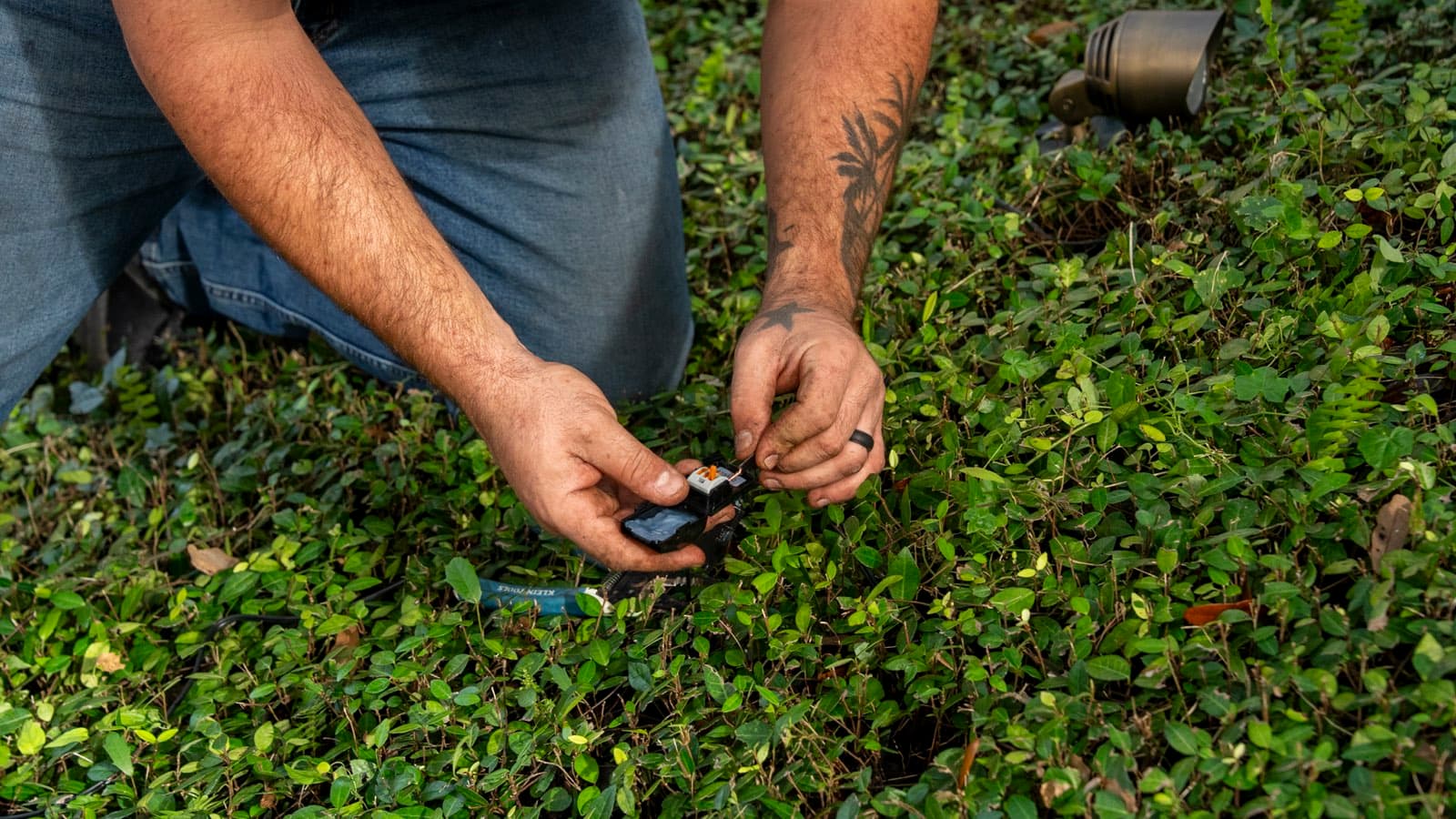
If you run a home service business in Florida and you are trying to work out what to do with video ads, the short version is that one polished video will not carry it. What works is a handful of plain, short clips filmed on jobs you are already running, each built to do one job inside the first three seconds. And this fall, with a hurricane season that mostly never showed up, video ads for home service businesses in Florida matter more than they did last year.
The short answer
- Quantity beats polish. Four to six different short videos in rotation outperform one expensive one.
- Vertical, short, readable with the sound off. Reels is Meta's biggest and cheapest video inventory and it is 9:16 only.
- The first three seconds are the whole ad. Nobody scrolled to you on purpose.
- Film the work you already do. The tear-off, the trench, the panel swap, the reveal.
- Judge it on cost per landing page view, then cost per booked job. Views and likes tell you nothing.
- Refresh before it dies. When cost per result climbs after a few weeks, the creative is tired — not the targeting.
Why this fall is different in Tampa Bay
NOAA's updated outlook, issued 6 August, puts a 75% chance on a below-normal Atlantic hurricane season: 7 to 13 named storms against a 1991–2020 average of 14, and 0 to 2 major hurricanes against an average of 3. The cause is a strong El Niño, which NOAA gave a 90% chance of holding through August, September and October — the peak months (NOAA Climate Prediction Center).
For Florida generally that is good news. For a contractor it quietly changes the math. Roofers, fence crews, tree services, restoration companies, gutter installers and everything downstream of wind damage normally get some share of their pipeline handed to them between June and November. This year, much less of it. Everyone in Pinellas and Hillsborough is competing for the same homeowner who was going to replace the roof eventually.
That homeowner is not searching yet. Which is the entire argument for video ads: search reaches people who already decided, and there are fewer of those this year than usual. If you want to know how to split money between the two, we worked through that in local SEO vs paid ads for Florida contractors.
What a home service video ad actually has to do
A video ad in a feed carries a handicap a Google search ad never does: nobody went looking for you. The ad is an interruption, and it gets about three seconds to earn the next ten.
So the job of the first three seconds is not to sell a roof. It is to buy attention. That changes what you film:
- Open on the work, not on your logo. A logo card at the front is three seconds spent on the only thing the homeowner does not care about.
- Get close. Hands, tools, the actual material. Wide establishing shots read as stock footage, and half the reason this works at all is that it visibly is not.
- Caption everything. Assume it plays silent, because most of the time it does.
- One idea per video. A clip that covers financing, warranty and the crew covers nothing.
Meta's own Reels ads guidance is blunt about format: vertical 9:16, built for a full-screen phone. Anything shot horizontally gets cropped, and the crop is rarely kind.
The four ads a home service rotation needs
| Ad | What it does | What to film |
|---|---|---|
| Process clip | Proves the work is real | 20 seconds of the messy middle — tear-off, trench, panel swap |
| The reveal | Sells the outcome | Same angle before and after, cut together |
| Owner answer | Kills one objection | You, to camera, answering a question you get every week |
| Proof clip | Borrows someone else's trust | A customer saying one specific thing, or a finished job with the city on screen |
Those four are different in kind, not just in edit. That distinction matters, because Meta's delivery system is a comparison engine — it needs options that are genuinely unalike to find the winner. Six near-identical cuts of the same drone pass is one ad wearing six hats.
How many you need, and how often to replace them
Four to six live at once is the right range for a local budget. Not fifty. You are not a national brand and you do not have the spend to learn anything from fifty.
Fatigue arrives faster here than most advice accounts for, because the audience is small. Clearwater is not a big pool. Neither is Palm Harbor, or the slice of St. Petersburg you actually serve. Run one video hard at a tight service radius and you will exhaust the audience in weeks, not months. The tell is frequency climbing while cost per result climbs with it. That is a creative problem, and swapping audiences will not fix it.
The practical answer is to shoot in batches. One job day, filmed properly, produces four to six usable clips — which is the argument in one shoot day, thirty days of content, and the reason we produce 90+ videos a quarter rather than a handful of expensive ones.
What to grab, by trade: roofers get the tear-off and the dry-in. HVAC gets the old air handler coming out and the new one going in. Plumbers get the camera down the line and the cut section of old pipe held up to the lens. Electricians get the panel, before and after — a $1,800 to $4,500 job that looks like nothing in a photo and looks like real work on video. Pool builders have their own sequence, covered in pool builder video ads.
How to tell whether it worked
Views are not a result. Neither are likes, and neither is reach on its own.
The ladder that matters runs: cheap attention → site visits → booked jobs. One of our roofing campaigns is a clean example of the shape — Coastal Brothers Roofing spent $896.39 and got 134,092 impressions across 83,195 people, which turned into 2,401 landing page views at $0.37 each, and five-plus roofs signed inside thirty days.
The number to watch first is that cost per landing page view, because it tells you whether the creative is doing its job before the website gets blamed. Then work backwards from a job. A Tampa roof replacement runs $13,500 to $30,000; an HVAC replacement $6,000 to $14,000. Against numbers like those, a cost per booked job that looks alarming in isolation is often fine.
When video ads are the wrong tool for a home service business
Worth saying plainly, because plenty of agencies will not:
- Emergency work. Nobody watches a Reel with water coming through the ceiling. That demand lives in search, and Local Services Ads are usually the better home for it.
- No follow-up. Video ads produce leads at volume and at odd hours. If nobody answers inside the hour, you have bought expensive silence — fix the follow-up system first.
- Budgets too small to learn. Below a real floor, Meta never gathers enough signal to optimize, and you pay for an education that never finishes.
- A refusal to appear. You can run this without ever being on camera. You will just be competing without the cheapest trust you own.
The next 30 days
- Pick one job in October and film it — phone is fine, vertical, close.
- Cut four different videos out of it, not four versions of one.
- Run them to your real service radius, not a 25-mile guess.
- Watch cost per landing page view for two weeks before touching anything.
- Replace the two worst, keep the winner, repeat next month.
Seasonal residents start landing in October and the market runs hot through March. Creative that is already live and already learned by then is worth considerably more than creative that launches in January.
If you want a second opinion on what you are already running — or you would rather someone else stood on the roof with the camera — tell us what trade you are in and where you work. We will tell you straight whether video is the right spend for you this season.
Questions people ask about this
- How long should a video ad be for a home service business?
- Keep prospecting videos short — most of ours land between 15 and 30 seconds. The decision is made in the first three seconds regardless of total length, so a 60-second video does not buy you more attention, it just gives you more room to lose it. Longer cuts are worth running only to people who have already watched an earlier ad or visited your site.
- How many video ads should I run at once?
- Four to six genuinely different videos is the right range for most local home service budgets. Meta's delivery system works by comparing creatives against each other, so a single video gives it nothing to choose between. Four near-identical clips do not count as four — the differences have to be real, like a process clip versus an owner talking to camera.
- Do video ads work better than photo ads for contractors?
- Not automatically. A sharp before-and-after photo can beat a boring video. Video wins when the work is a process the homeowner cannot picture — a re-pipe, a tear-off, a panel upgrade — because it shows competence in a way a finished photo cannot. Run both and let the results decide rather than assuming video is the upgrade.
- Can I film video ads on my phone?
- Yes, and for process footage a phone is often better because it is already in your pocket when the good moment happens. Film vertical, hold the shot still for a few seconds longer than feels natural, and get close to the work. The place a phone falls short is audio on a loud job site, which is why most of these ads should be built to read with the sound off.
- Do I have to be on camera for this to work?
- No, but you give up the cheapest trust available to you. Homeowners hiring a contractor are trying to work out who is going to show up. Thirty seconds of the owner answering one ordinary question does more for that than a polished voiceover. If you will not do it, lean harder on process footage and on customers speaking for themselves.
- When should a Florida contractor start running video ads for winter work?
- Before the phone slows down, not after. Seasonal residents start arriving in October and the market peaks January through March, so creative that is already running and already learned in October is working from a standing start when demand arrives. Launching in January means spending the first several weeks paying for the algorithm's education.
Want this run for you?
Fifteen minutes. We'll pull your competitors' current ads and tell you what we'd shoot.
Book a Call