The right time to start marketing is when you're too busy to think about it
Every contractor starts marketing when the phone goes quiet. That's the one time of year it can't work — and here's the math on why.
By Ryan McKeel · JUICED Media, Clearwater FL
Ask a contractor when he plans to get serious about marketing and the answer is almost always some version of the same thing.
Things slow down after the season. I'll look at it then.
It's a completely reasonable thing to say. It's also the single most expensive scheduling decision in this business, and I want to walk through why in plain numbers rather than just asserting it.
The lag nobody accounts for
A paid social campaign does not start working the day you turn it on.
Week one is the algorithm figuring out who responds. Week two or three you find out which hook is carrying and which three are dead weight. Somewhere in the second month the cost per lead drops meaningfully, because there's finally enough conversion data for the system to stop guessing. Month three is usually where it gets genuinely efficient.
Call it sixty to ninety days from "go" to "this is working."
Now put that on a calendar.
An HVAC company in Tampa Bay is buried from June through September. October is fine. By November the phone sounds different, and by early December somebody is doing the math on whether they can keep everyone on through January.
So that's when they call an agency. First week of December.
Sixty to ninety days from the first week of December is February to early March. The trough — the eight to ten weeks that actually hurt — is over by the time the campaign is any good. They paid for the learning phase and got the results right as demand returned on its own.
Then the next December, having concluded that marketing doesn't work, they don't call anybody.
The part that makes it worse
Marketing in the trough isn't just late. It's late and expensive, for two reasons that compound.
You're spending from the wrong pocket. February cash flow is the worst cash flow of the year. Every dollar of ad spend in that window hurts about three times more than the same dollar in July, so budgets get cut halfway through the learning phase — which guarantees the campaign never gets past the expensive part. This is the most common way a contractor concludes ads don't work: they killed it at the exact moment it was about to get cheap.
Everyone else had the same idea. Your competitors also start marketing when it gets slow. Auction pressure is highest in the season when demand is lowest. You're bidding against more people for fewer buyers.
Run it the other way and both problems invert. You build in July, when the money is there and half your competitors are too busy to bother.
What "building in the busy season" actually means
It doesn't mean spending your peak-season budget on ads to get work you already have. That would be silly — you can't service it.
It means using the busy season to build the three things that take time and can only be made while work is happening:
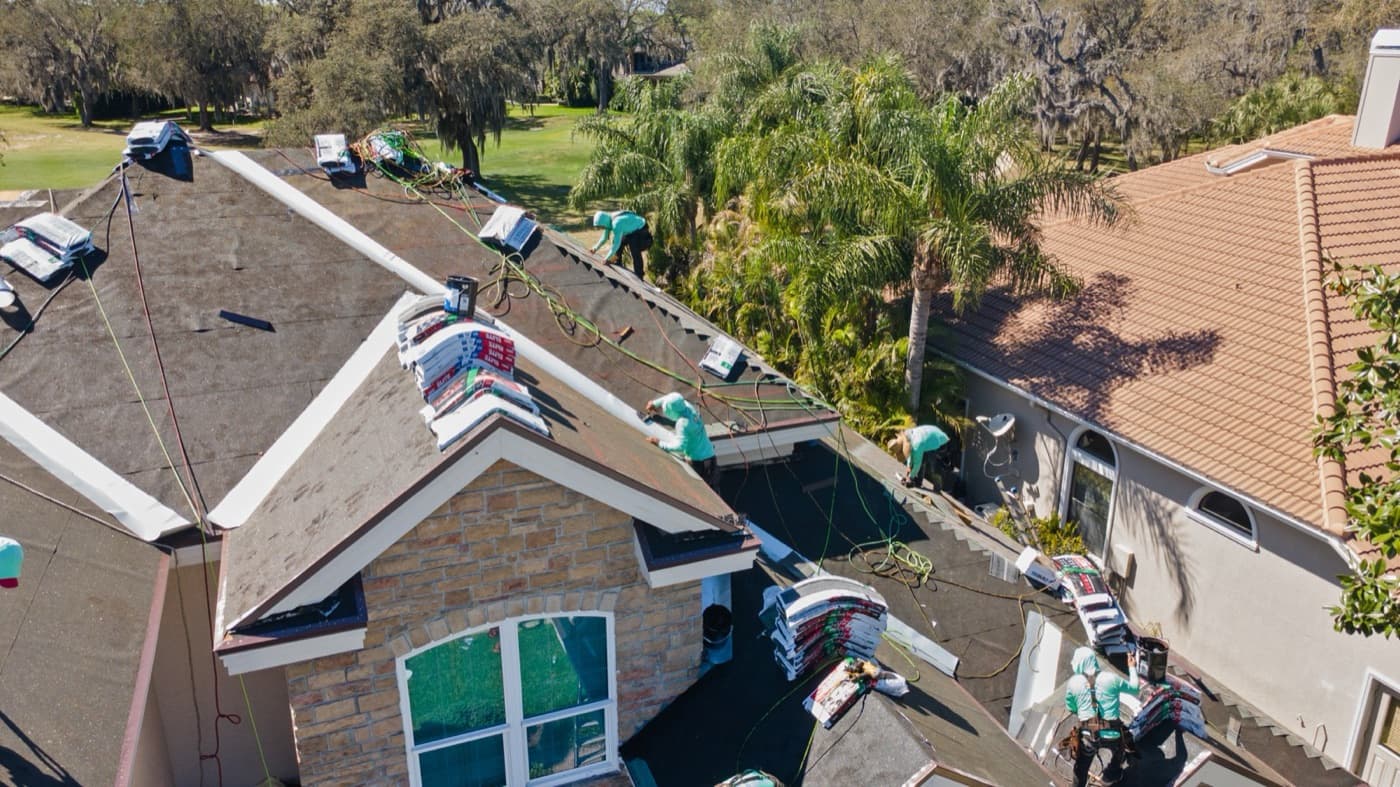
Footage. You cannot shoot a roof being replaced in February if nobody is replacing roofs in February. The build content that carries your slow season has to be captured while the jobs exist. This is the one that's genuinely impossible to catch up on later.
A warm audience. Everyone who watches your video becomes a retargeting audience. Build that pool during the months when attention is cheap and plentiful, and in January you're advertising to people who already know who you are — which costs a fraction of reaching cold strangers.
A working account. Get the expensive learning phase over with while cash flow can absorb it. Come January you're not starting, you're scaling something that already knows what a good lead looks like.
The version I'd say out loud
The only time you can afford to build a pipeline is when you don't need one.
That's uncomfortable, because the moment you don't need one is exactly when nobody feels like thinking about it. But the work that fills your February gets built in July. It isn't a slogan — it's just what the sixty-to-ninety-day lag does to a calendar.
When to start, by trade
Rough guide for Tampa Bay. Work backwards ninety days from when you actually need the phone to ring.
- HVAC — start in August or September for a defended winter
- Roofing — start in June, during storm season, for a working February
- Pool builders — start in October or November, so you're at full strength for the January-to-May sales window
- Electrical — start in February or March, so the storm-season spike lands on a campaign that's already efficient
- Plumbing — less seasonal, so the trigger isn't a month. It's the moment you notice most of your work traces back to three or four referral sources.
If you're in your busy season right now and this is landing badly, that's kind of the point. The ninety days you have while the phone still rings is the asset. Spending it is optional, but it doesn't roll over.
Want this run for you?
Fifteen minutes. We'll pull your competitors' current ads and tell you what we'd shoot.
Book a Call