Facebook ads for roofers: why most of them fail before the money is spent
Nobody scrolls Facebook looking for a roofer. That single fact decides whether your ads work — and it's the one most roofing campaigns are built to ignore.
By Ryan McKeel · JUICED Media, Clearwater FL
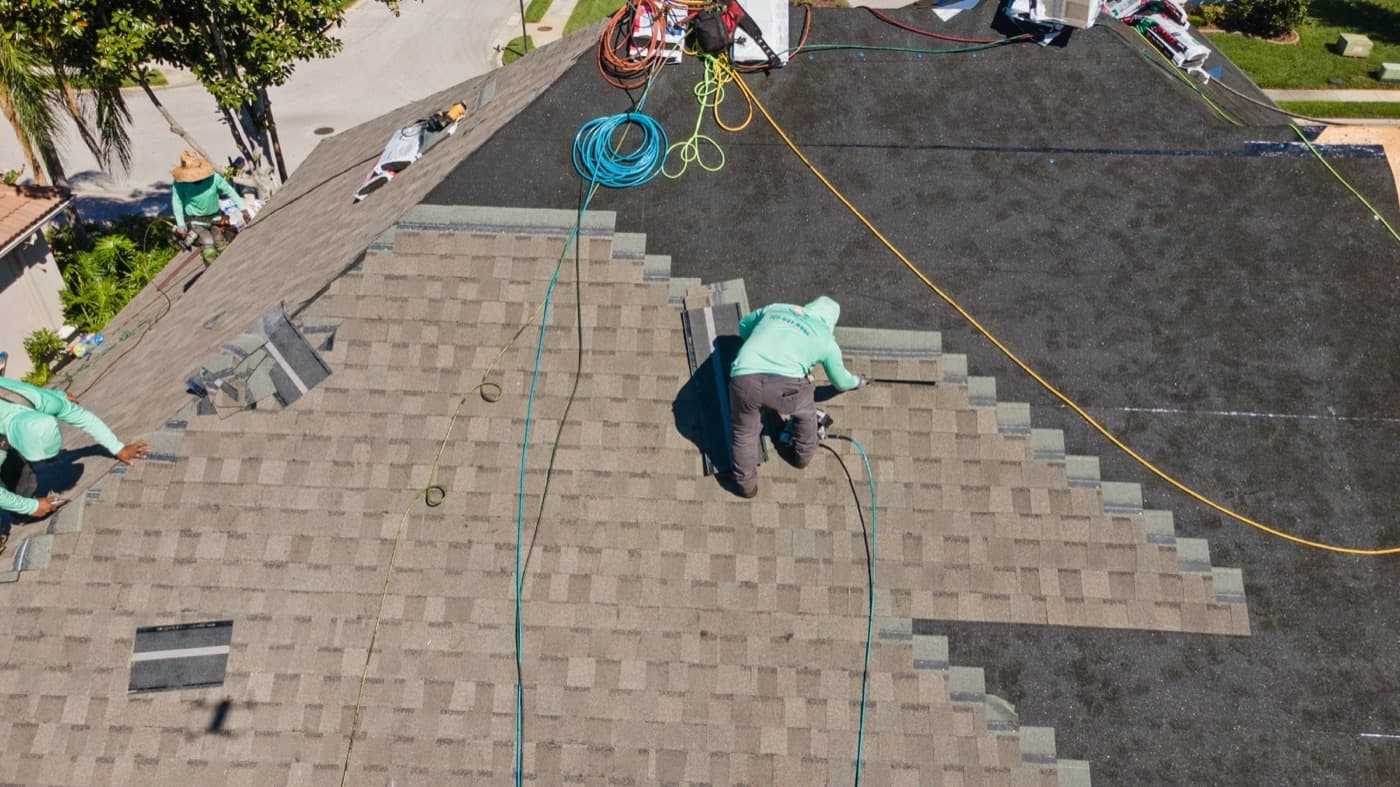
Start with the fact that decides everything else: nobody opens Facebook looking for a roofer.
That sounds obvious. It isn't, because most roofing ads are written as though the opposite were true. They lead with "licensed and insured," a stock photo of a shingle, and a call to action asking for a free estimate — which is exactly what you'd write if the person had gone looking for you.
They didn't. They were watching a video about someone's dog.
Search and social are opposite problems
On Google, demand already exists. Someone typed "roof leak repair" because water is coming through their ceiling. Your job is to be there and be trusted. That's demand capture.
On Facebook, no demand exists yet. Your job is to make someone who was not thinking about their roof start thinking about their roof. That's demand generation, and it's a completely different piece of work.
Run capture-style creative in a generation environment and you get the outcome nearly every roofer describes: money spent, some leads, all of them tyre-kickers.
What actually stops the scroll
The first second is the whole game. Not the offer, not the credentials — the first second.
Things that work in that first second, in rough order:
- Damage the homeowner recognises. A lifted shingle. Granules in a gutter. A stain spreading across a ceiling. People have seen these in their own house and not known what they meant.
- Something visually surprising. Drone footage moving over a roof reads as unusual on a feed built for faces and pets.
- A specific, local reference. "If your roof went on before 2005 in Pinellas County" outperforms "quality roofing services" because it makes a claim about you, the viewer.
Things that don't work: your logo, your truck, the words "licensed and insured," a stock photo of anything, and any headline containing the word "solutions."
The offer problem
A free estimate is not an offer. Every roofer offers it, it commits the homeowner to an appointment they have to be home for, and it signals that a salesperson is coming.
Better options for someone who wasn't looking for you:
- A free roof-age check from aerial imagery, with no visit required
- An honest answer on whether they need a replacement or four more years
- A short guide to what an insurance adjuster actually looks for
Notice the pattern. Each is lower commitment than an in-person estimate, and each is genuinely useful to someone who is merely curious. That's the state most of your Facebook audience is in.
What to shoot
You do not need a production company to make this work, but you do need real footage of your own jobs. Stock imagery is the single fastest way to look like every other roofer running ads in the county.
The short list:
- Drone footage over an active tear-off
- Close detail of failure — lifted, cracked, curling, or bare
- Decking underneath once the old roof is off, especially where there's rot
- Your crew working, from ground level, unstaged
- Thirty seconds of you explaining one thing homeowners get wrong
That last one matters more than it looks. A named human being from your county explaining something useful is the thing a national lead-generation company physically cannot produce.
The measurement mistake
Most roofing campaigns are optimised for form fills, and then the roofer is surprised to receive a pile of low-quality form fills. The campaign did exactly what it was told.
If your conversion event is a form fill, the platform will buy you the cheapest form fills available — which means the people least likely to buy. Set the conversion to something further down: a booked inspection, or a qualified call. Fewer leads, better ones, and a cost per lead that looks worse on a report while making more money.
The realistic timeline
Facebook ads for a roofer are not a switch. The people you reach in week one were not planning to replace a roof in week one.
What tends to happen: engagement in the first fortnight, a handful of early leads from the small slice of the audience who already knew they had a problem, and then a slow build as the retargeting pool fills with people who watched but weren't ready. Most of the value arrives in months two and three, from people who saw you weeks before they called.
Which is why running these ads only during storm season is backwards. The audience you build in spring is who you sell to in the summer.
The short version
- Nobody is searching for you on Facebook, so capture-style creative fails there.
- The first second decides everything. Lead with damage a homeowner recognises, not credentials.
- A free estimate isn't an offer. Give something useful that requires no appointment.
- Shoot your own jobs. Stock footage makes you look like everyone else.
- Optimise for booked inspections, not form fills, or the platform will buy you junk.
- Judge it at month two or three. The retargeting pool is where the money is.
Questions people ask about this
- Do Facebook ads work for roofing companies?
- Yes, but not the way Google Ads work. Nobody browses Facebook looking for a roofer, so ads that lead with credentials and a free estimate offer tend to fail. Ads built on footage of real damage a homeowner recognises — lifted shingles, granules in a gutter, a spreading ceiling stain — perform because they create awareness of a problem rather than waiting for someone to search for it.
- How much should a roofer spend on Facebook ads?
- There is no universal number, because it depends on your average job value and how competitive your county is. The useful test is whether your monthly budget buys enough impressions to learn anything. If it only reaches a few hundred people, the campaign never gathers enough data to optimise and you would do better putting that money into Google Local Services Ads first.
- Why do my Facebook ads only bring price shoppers?
- Usually because the campaign is optimised for form fills. Meta will faithfully buy the cheapest form fills available, which are the people least likely to buy. Changing the conversion event to a booked inspection produces fewer leads at a higher apparent cost per lead, and more actual work.
- How long before Facebook ads produce roofing jobs?
- Expect early leads within the first two weeks from the small share of your audience who already knew they had a problem. The larger return arrives in months two and three, as the retargeting pool fills with people who watched but were not ready. Running ads only during storm season removes exactly that compounding effect.
Want this run for you?
Fifteen minutes. We'll pull your competitors' current ads and tell you what we'd shoot.
Book a Call