The contractor growth system: going from referrals to a full pipeline in Florida
Referrals stall without warning. Here is the contractor growth system Florida crews use to build a pipeline they control, and what to build first.
By Ryan McKeel · JUICED Media, Clearwater FL
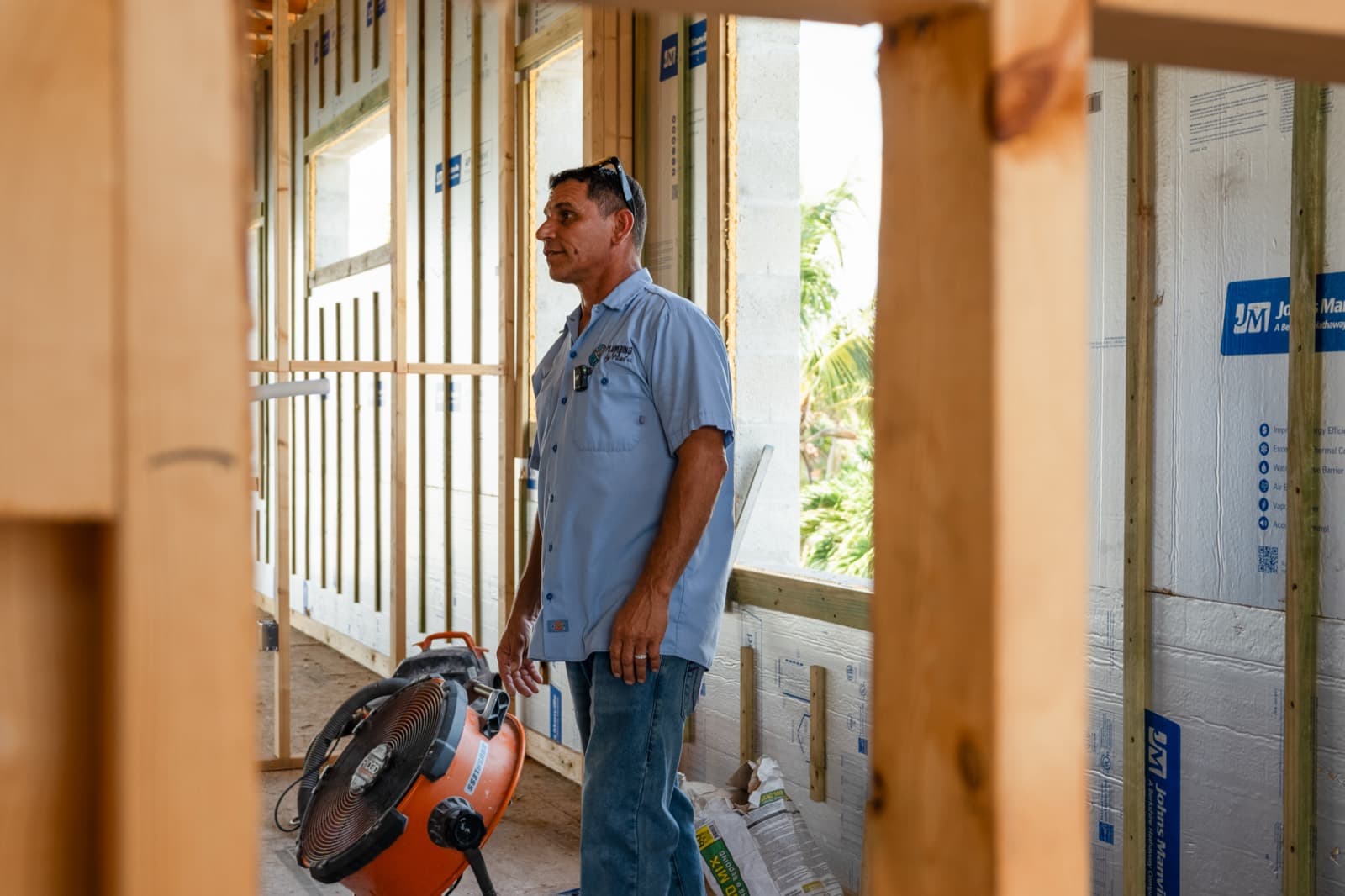
A contractor growth system is the set of channels, follow-up, and tracking that brings you work whether or not anyone mentioned your name this week. If your Florida pipeline still rises and falls with referrals, that system is what is missing — and the order you build it in matters more than which tools you buy.
The short answer: referrals are a lagging indicator. The calls you get in September come from jobs you finished last winter. A growth system adds three things referrals cannot give you — a volume dial, a speed dial, and a record of what actually worked. Build search visibility first, paid second, follow-up alongside both, and measure in quarters.
What a contractor growth system actually is
Most contractors hear "growth system" and picture software. It is not software. A contractor growth system is four layers stacked in a specific order:
- Demand capture. People already looking for your trade, right now. Search, map pack, Local Services Ads.
- Demand creation. People who will need you in three months but are not looking yet. Video, social, retargeting.
- Follow-up. What happens between the form fill and the appointment.
- Measurement. Knowing which of the above paid for itself.
Referrals sit outside all four. That is the point. You cannot audit a referral, you cannot double it, and you cannot tell a referral to show up in the third week of August when your crew has nothing booked.
Why referrals stall in Tampa Bay, and it is not your work
A referral is a receipt for a job you already did. Somebody liked the work, remembered you, and happened to be in a conversation where a neighbor said they needed a roofer. That chain takes six to eighteen months to complete.
So your referral volume today is a picture of your production two seasons ago. In Pinellas County that creates a specific, predictable trap. You get busy in the fall, you stop marketing because you are busy, and the referral echo from that busy stretch carries you through winter. Then spring arrives with nothing behind it.
Two Florida factors make it sharper:
- Storm-driven demand is borrowed, not earned. NOAA is forecasting a below-normal 2026 season, with 7 to 13 named storms and no hurricane landfalls so far this year (NOAA outlook). Quiet seasons are good news for homeowners and bad news for anyone whose phone only rings after a storm.
- Snowbird timing shifts your buyer. From October through March, a large share of Pinellas and Hillsborough homeowners are decision-makers who were not here in July. They have no local network to ask. They search.
That second point is the whole argument. A referral-only business is invisible to the exact people arriving in Clearwater and Dunedin in the next six weeks.
The math: how many leads you actually need
Do not start with a budget. Start with the number of jobs you need, then work backward.
| Step | Formula | Example |
|---|---|---|
| Jobs needed | Revenue goal ÷ average job | $84,000 ÷ $14,000 = 6 |
| Appointments | Jobs ÷ close rate | 6 ÷ 0.33 = 18 |
| Leads | Appointments ÷ set rate | 18 ÷ 0.50 = 36 |
Thirty-six leads a month. That is the real target. Now you can judge any channel honestly, because you know what it has to deliver.
Run your own numbers with your own average ticket. An HVAC replacement in Tampa Bay runs $6,000 to $14,000. A repipe runs $4,500 to $15,000. A panel upgrade runs $1,800 to $4,500. A roof replacement runs $13,500 to $30,000. The contractor doing $30,000 roofs and the contractor doing $2,500 panel swaps need completely different systems, and most generic marketing advice ignores that.
The four layers, in build order
Start with what you own. Your Google Business Profile and your website are the only assets that keep working after you stop paying. Fill the profile out completely, post real job photos weekly, and get reviews on a schedule instead of when you remember — Google's own profile guidelines spell out what counts as complete. Our own profile sits at 5.0 across 71 reviews, and that was not an accident — it was a step in a checklist after every job. Local SEO is slow, usually three to six months, which is exactly why it has to go first.
Add paid once the foundation converts. If your site does not turn visitors into calls, paid traffic just makes the leak more expensive. Once it does, Local Services Ads put you at the very top for emergency and high-intent searches, and Meta ads reach homeowners before they start shopping. On one roofing campaign we spent $896.39 and drove 2,401 landing page views at $0.37 each, from 134,092 impressions reaching 83,195 people, which turned into 5-plus roofs in 30 days. That is the demand-creation layer doing its job.
Fix follow-up before you scale anything. Speed to lead is the cheapest improvement available to most contractors. A lead you call in five minutes and a lead you call the next morning are not the same lead. If you have no system routing and reminding, a CRM setup will do more for close rate this quarter than a bigger ad budget.
Measure in quarters, not weeks. Tag every lead source. Thirty days of search data tells you almost nothing. Ninety days tells you where to move money.
The honest tradeoff nobody mentions
A referral-only business is usually more profitable per job than a marketed one. No ad spend, shorter sales cycle, less price comparison, higher trust going in. When you add paid channels, your average margin per job goes down.
You are not trading up on margin. You are trading margin for control and predictability. That is a real cost, and it is worth it if the alternative is a March with three jobs on the board — but pretending it is free is how contractors end up resentful about their marketing spend four months in.
It also means the answer is never "replace referrals." Keep asking for them. Ask 30 days after the job is done, when the homeowner is still happy and the work still looks new. The system runs underneath the referrals, not instead of them.
Where Florida's calendar changes the plan
Hurricane season runs June 1 through November 30, and we are past the climatological peak. Snowbird arrivals begin in October and peak January through March. Work backward from that:
- September and October: build. Get the profile, the reviews, and the site right before out-of-state homeowners start searching.
- November through March: spend. This is when demand is highest and your competition's referral engine is weakest, because the buyers are new here.
- April through August: hold. Do not go dark. The referrals you are living on in January come from the work you book now.
If you want the deeper comparison of which channel to fund first on a tight budget, we covered that in local SEO vs paid ads for Florida contractors.
What to do this month
Pick one. Not all four.
- Run the lead math above and write the number on the wall.
- Audit how long it currently takes you to call a new lead. Time it honestly.
- Ask your last ten completed jobs for a Google review, by name, by text.
Then decide whether you are building this yourself or handing it off. Either is fine. Drifting is not.
If you want a second opinion on which layer is actually your bottleneck, send us the numbers — your average job, your close rate, and where your last ten leads came from. We will tell you what we would fix first, and we will tell you if the answer is nothing.
Questions people ask about this
- How do contractors get leads without referrals?
- The reliable sources are the ones you own: a Google Business Profile that ranks in the map pack, a website that converts, paid ads pointed at people already searching, and follow-up that reaches a lead in minutes instead of days. Referrals still come in on top of that. The difference is that you are no longer waiting on them.
- Is word of mouth enough to grow a contracting business?
- It is enough to stay the same size. Word of mouth scales with the number of jobs you finished six to eighteen months ago, so it cannot be turned up when you have an open week. Most contractors who plateau are not bad at their trade. They just have no lever to pull.
- How many leads does a contractor need per month?
- Work backward. Divide your monthly revenue target by your average job size to get jobs needed, divide that by your close rate to get appointments, then divide by the share of leads that turn into appointments. A contractor wanting six $14,000 jobs at a 33 percent close rate and a 50 percent set rate needs roughly 36 leads a month.
- How long does it take to build a contractor lead pipeline?
- Paid ads and Local Services Ads can produce calls in the first week. Google Business Profile and local SEO usually take three to six months to move. Plan on a full quarter before the system feels steady, and do not judge search results on thirty days of data.
- Should a contractor buy shared leads or generate their own?
- Bought leads are sold to three or four companies at once, so you are competing on speed and price before you have said a word. They are a reasonable stopgap when you need work this week. They are a bad foundation, because you are renting a pipeline that the vendor can reprice or resell at any time.
Want this run for you?
Fifteen minutes. We'll pull your competitors' current ads and tell you what we'd shoot.
Book a Call